

Overview
The Attorney-General’s Department (AGD) tables an annual report each year in the Parliament of South Australia. Each annual report outlines financial performance, key initiatives for the department and support of whole-of-government initiatives.
Read the report
To:
The Honourable Kyam Maher, MLC
Deputy Premier
Minister for Aboriginal Affairs
Attorney-General
Minister for Industrial Relations
Minister for Arts
Special Minister of State
The Honourable Michael Brown, MP
Minister for Consumer and Business Affairs
This annual report will be presented to Parliament to meet the statutory reporting requirements of Associations Incorporation Act 1985, Building Work Contractors Act 1995, Companies (Administration) Act 1982, Controlled Substances Act 1984 (Part 7A)*, Conveyancers Act 1994, Co-operatives National Law (South Australia) Act 2013, Fair Trading Act 1987, Fire and Emergency Services Act 2005, Gambling Administration Act 2019 (Gambling Act means the Authorised Betting Operations Act 2000; the Casino Act 1997; the Gaming Machines Act 1992), Land Agents Act 1994, Land Valuers Act 1994, Liquor Licensing Act 1997, Plumbers, Gas Fitters and Electricians Act 1995, Residential Parks Act 2007, Residential Tenancies Act 1995, Second-hand Vehicle Dealers Act 1995, Security and Investigation Industry Act 1995 and the requirements of Premier and Cabinet Circular PC013 Annual Reporting.
This report is verified to be accurate for the purposes of annual reporting to the Parliament of South Australia.
*The Ministerial functions and powers under Part 7A of the Controlled Substances Act 1984 were conferred on the Attorney-General on 14 October 2021, by proclamation under s6 of the Administrative Arrangements Act 1994.
Submitted on behalf of the Attorney-General’s Department by:
Caroline Mealor
Chief Executive
30 September 2026
It has been another exciting year of change for the Attorney-General’s Department.
The biggest change, of course, has been the addition of the Arts Portfolio to our department, with the Honourable Kyam Maher MLC becoming the Minister for the Arts following the March 2026 election, as well as resuming the other ministerial portfolios he held in the last term of government.
Create SA is now a part of AGD and AGD has assumed oversight of some of South Australia’s biggest cultural icons, including the Adelaide Festival Corporation, the Art Gallery of South Australia, Country Arts SA, the SA Film Corporation, the State Library and the SA Museum.
Even before South Australia adopted the monicker “The Festival State” in the early 1980s, the arts has been an integral part of our state, our communities and our identity.
Being able to work with these tremendously talented individuals and organisations who are dedicated to keeping our creative industries at the forefront both locally and internationally represents a truly exciting opportunity for the department, and we welcome this chance to help cement and enhance our reputation in the arts the world over.
2026 also saw the second round of elections for South Australia’s historic First Nations Voice to State Parliament, with some existing members returned and other new faces joining the six Local Voices that advocate on behalf of Aboriginal communities across the state.
For a body that was only established a few short years ago, it has been inspiring to see not only the level of commitment members have brought to the work of the Voice, but also the amount of positive change that has already been delivered through this innovative, collaborative approach. The department continues to support the Voice to carry out its functions.
It was also an honour to play a role in the development and unveiling earlier this year of the bronze statue of trailblazing Yankunytjatjara woman Dr Lowitja O’Donoghue AC CBE DSG, which now sits on the banks of Tarntanya Wama.
Dr O’Donoghue’s statue is the first of a series that will be commissioned to celebrate the achievements of great Aboriginal South Australians and to better educate the community about the important roles they have played.
Law reform has continued to be a priority for this Government, with a number of pieces of legislation passed aimed at keeping South Australians safe. Key initiatives include the commencement of new Workplace Protection Order laws designed to better protect workers from antisocial or abusive behaviour; the commencement of the new child sex offender register, which is being administered through South Australia Police; and the passage through State Parliament of new laws aimed at getting tough on repeat young offenders.
Our work, health and safety regulator, SafeWork SA, has also embarked on its first major advertising campaign in recent memory with the launch of ‘Safety at work is a serious job’.
I’m sure many commuters have seen a billboard with Stanley the safety cone reminding us of the common hazards present in many South Australian workplaces, as part of this exciting campaign running across print, on-demand TV, social media, digital and billboards.
The department has continued to play a significant role in the justice system. The Crown Solicitor’s Office has provided legal advice on many of the government’s major projects and represented the state in a wide range of litigation. The Office of the Director of Public Prosecutions has continued to review and improve its processes, training, witness support and staff wellbeing whilst prosecuting a range of serious and complex matters.
We welcomed the Honourable Michael Brown MP, as the new Minister for Consumer and Business Affairs. Our consumer affairs watchdog, Consumer and Business Services, has continued to go from strength to strength under the leadership of Commissioner Brett Humphrey, with significant progress made in resolving longstanding disciplinary proceedings against the owners of the SkyCity Adelaide Casino, the establishment of a new dedicated Building Industry Response Team – an agile, flexible team designed to respond swiftly to new and emerging issues within the building sector – and the ongoing work in the regulation of the sale of tobacco and the fight against illicit tobacco and vape products.
The past financial year has also seen us bid farewell to Director of Public Prosecutions (DPP) Martin Hinton KC who, in April, announced his intention to return to private practice.
Over the course of many decades, Martin has gone above and beyond in his many roles within the legal profession in the public service – as Solicitor-General, Supreme Court Judge and DPP.
I wish him well and also take this opportunity to welcome our first female DPP, the exceptionally talented Mary Chalmers SC, who commenced in the role on 17 September 2026.
Mary began work with the Office of the DPP in South Australia at the start of this year as Deputy Director and, in a short time, has demonstrated exceptional legal and leadership skills as well as extraordinary compassion for those vulnerable witnesses and victims the office often encounters.
It was also a pleasure to welcome Jeremy Watherston to the team as Director of Forensic Science SA, following the resignation of John Doherty earlier in the year. Jeremy has held senior positions with forensic services in New South Wales, the Northern Territory and Queensland, and he brings a wealth of experience to this position.
It has been an honour to work with the Honourable Kyam Maher MLC and the Honourable Michael Brown MP and their staff. It continues to be a privilege to lead a diverse, dedicated workforce which is committed to serving the people of South Australia.
Caroline Mealor
Chief Executive
Attorney-General’s Department
In this section
Our strategic focus
Our purpose
We make a difference ensuring South Australia thrives by developing laws and policy, and delivering services that enable and support economic growth, safety and justice in the community. We deliver efficient and appropriate services to our customers, including the public service, in a way that is responsive, inclusive and collaborative.
Our vision
South Australia is safe, fair and the best place to live, work and do business.
Our functions, objectives and deliverables
Our six strategic goals are:
1. Safe and thriving communities
2. Fairly administered laws
3. An efficient and effective justice system
4. Our people meet customer needs
5. Progressive technology and supportive infrastructure
6. Shape the future workforce
Our organisational structure
View our Organisational Structure (PDF, 153.4 KB)
Changes to the agency
During 2025-26 there were no changes to the agency’s structure and objectives as a result of machinery of government changes.
However, CreateSA transferred from the Department of the Premier and Cabinet (DPC) to the Attorney-General’s Department effective from 1 July 2026.
Annual Reporting
The following areas of AGD submit their own annual reports:
- Equal Opportunity SA
- Office of the Director of Public Prosecutions
- Office of the Public Advocate
- Ombudsman SA
- Public Trustee
- South Australian Civil and Administrative Tribunal
- South Australian Employment Tribunal
- State Records SA
- Victims of Crime SA
Other agencies that submit their own annual report, and fall within the Portfolio responsibility of the Attorney-General, Special Minister of State or Minister for Small and Family Business, are:
- Courts Administration Authority
- Electoral Commissioner
- Independent Commission Against Corruption
- Judicial Conduct Commissioner
- Legal Services Commission
- Office of the Inspector
- Office for Public Integrity
- Small Business Commission SA
Our Ministers
The Hon Kyam Maher ML
The Hon Kyam Maher MLC, Deputy Premier, Minister for Aboriginal Affairs, Attorney-General, Minister for Industrial Relations and Public Sector and Special Minister of State, is the state’s principal legal advisor to the government.
The Minister is a member of Cabinet and is responsible for:
- exercising certain powers and regulating and administering a range of legislation
- developing and implementing policy
- legal action relevant to the state government.
The Hon Michael Brown MP
The Hon Michael Brown MP is the Minister for Consumer and Business Affairs.
The Minister supports protecting consumers and supporting and regulating business.
Key personnel
Mike Wait SC
Mike is the Solicitor-General which is a statutory officer appointed by the Governor under the Solicitor-General Act 1972. The Solicitor-General is the second law officer of the state. Acting on the instructions of the Attorney-General, the Solicitor-General advises the state and appears as counsel on behalf of the state, including on behalf of the Crown Solicitor and the Director of Public Prosecutions, as required.
Martin Hinton KC
Martin was the Director of Public Prosecutions (DPP) until July 2026. The DPP is a statutory officer, independent of AGD, who initiates and conducts criminal prosecutions in the Magistrates, District and Supreme Courts of South Australia. The DPP also conducts appeals in the Court of Appeal and the High Court of Australia. The DPP oversees the operations of the Office of the Director of Public Prosecutions (ODPP) comprising Trial Counsel, Solicitors (including Confiscations), and Business Services (including the Witness Assistance Service) to ensure the ODPP provides an independent and effective criminal prosecution service that is timely, efficient, and just.
Lucinda Byers
Lucinda is the Crown Solicitor of South Australia and is responsible for leading the Crown Solicitor’s Office (CSO), which comprises the Public Law, Civil Litigation, Crown Counsel, Commercial, Environment & Native Title and Business Services sections. The CSO provides advice to, and represents, the Government on behalf of the Attorney-General. This includes providing legal services to Cabinet, Ministers and Government agencies on a wide variety of legal issues.
Andrew Swanson
Andrew is the Executive Director of the Finance, People and Performance division. He is the Chief Financial Officer and responsible for leading a range of corporate functions including Financial Services, Human Resources, Facilities and Performance and Business Services. The division also includes Forensic Science SA and the Small Business Commission SA.
Brett Humphrey
Brett is the Commissioner for Consumer Affairs and Liquor and Gambling within Consumer and Business Services (CBS). CBS has a broad portfolio including consumer protection, product safety, occupational licensing, liquor licensing, gambling regulation, charities regulation, residential tenancies, births, deaths and marriages and Justice of the Peace services.
Glenn Farrell
Glenn Farrell is the Executive Director of SafeWork SA (SWSA), South Australia's workplace health and safety regulator. In addition to administering and enforcing the State’s work health and safety laws, SWSA has regulatory responsibilities for state-based industrial relations, explosives and dangerous substances legislation. SWSA is accountable to the Minister for Industrial Relations.
John Doherty
John was the Director, Forensic Science SA (FSSA) until February 2026. FSSA provides independent scientific and pathology services to the justice system of South Australia in the disciplines of Biology, Chemistry, Pathology and Toxicology. FSSA collaborates closely with the tertiary sector, particularly the three local universities, to ensure it maintains a high quality and contemporary scientific service through research, training and teaching. Jeremy Watherston began as Director, FSSA in July 2026.
Katherine Hawkins
Katherine is the Executive Director for the Policy and Community division, including Justice Policy and Analytics and Strategic Communications. The division also consists of the offices of the Ombudsman, Public Advocate, Public Trustee, the Commissioner for Equal Opportunity, the Director of the Office for Public Integrity, and the Commissioner for Victims' Rights, which aim to protect the rights of the public. Katherine started in the role in May 2026.
Matt Smith
Matt Smith is the Executive Director of the Projects and Technology division. He is responsible for leading technology, Project Delivery, Public Safety and Information Management services. The division provides Public Safety and Justice Information services to more than twenty other Government agencies.
Nerida Saunders PSM
Nerida is the Executive Director of the Aboriginal Affairs and Reconciliation (AAR). She is responsible for providing engagement, support and advice for Aboriginal people and government. In addition, AAR works with Aboriginal South Australians to ensure that the needs of Aboriginal people and communities are met, including in areas of identified disadvantage, as well as those of strength.
Steph Halliday
Steph was the Executive Director of Legal and Legislative Services until June 2026. The division includes Legislative Services, who provide legal and policy advice on legislative reform, Parliamentary Counsel, the CSO, the ODPP, Industrial Relations and Policy (IRAP), the South Australian Civil and Administrative Tribunal (SACAT), South Australian Employment Tribunal (SAET) and the State Redress Response Unit. Fiona Williams-Mitchell began as Executive Director in July 2026.
Tony Brumfield
Tony is the Public Trustee and is responsible for the efficient management of the Public Trustee Office and the effective implementation of the Public Trustee Act 1995. The role includes acting as Administrator, Executor or Trustee of deceased estates, as Administrator of estates of protected persons under the Guardianship and Administration Act 1993, as Manager of estates of protected persons under the Aged and Infirm Persons’ Property Act 1940 and as Attorney or Agent.
Legislation administered by the agency
*Aboriginal Heritage Act 1979
*Aboriginal Heritage Act 1988
Aboriginal Lands Trust Act 2013
Action for Breach of Promise of Marriage (Abolition) Act 1971
Adelaide Children's Hospital and Queen Victoria Hospital (Testamentary
Dispositions) Act 1990
*Adelaide Festival Centre Trust Act 1971
*Adelaide Festival Corporation Act 1998
*Adelaide Festival Theatre Act 1964
Administrative Arrangements Act 1994
Administrative Decisions (Effect of International Instruments) Act 1995
Aged and Infirm Persons' Property Act 1940
Age of Majority (Reduction) Act 1971
Aircraft Offences Act 1971
*Anangu Pitjantjatjara Yankunytjatjara Land Rights Act 1981
ANZ Executors and Trustee Company (South Australia) Limited (Transfer of
Business) Act 1996
*Art Gallery Act 1939
Associations Incorporation Act 1985
Australia Acts (Request) Act 1985
Australian Crime Commission (South Australia) Act 2004
Authorised Betting Operations Act 2000
Bail Act 1985
Ballot Act 1862
Births, Deaths and Marriages Registration Act 1996
Building and Construction Industry Security of Payment Act 2009
Building Work Contractors Act 1995
Burial and Cremation Act 2013
Business Names (Commonwealth Powers) Act 2012
*Carrick Hill Trust Act 1985
Casino Act 1997
Child Sex Offenders Registration Act 2006
Civil Liability Act 1936
Classification (Publications, Films and Computer Games) Act 1995
Collections for Charitable Purposes Act 1939
Commercial Arbitration Act 2011
*Commonwealth Legislative Power Act 1931
Commonwealth Places (Administration of Laws) Act 1970
Commonwealth Powers (De Facto Relationships) Act 2009
Commonwealth Powers (Family Law) Act 1986
Community Titles Act 1996
Companies (Administration) Act 1982
Constitutional Powers (Coastal Waters) Act 1979
Construction Industry Long Service Leave Act 1987
Conversion Practices Prohibition Act 2024
Conveyancers Act 1994
Co-operatives National Law (South Australia) Act 2013
Coroners Act 2003
Corporations (Administrative Actions) Act 2001
Corporations (Ancillary Provisions) Act 2001
Corporations (Commonwealth Powers) Act 2001
Corporations (South Australia) Act 1990
Courts Administration Act 1993
COVID-19 Emergency Response Act 2020
Credit (Commonwealth Powers) Act 2010
Credit (Transitional Arrangements) Act 2010
Criminal Assets Confiscation Act 2005
Criminal Investigation (Covert Operations) Act 2009
Criminal Investigation (Extraterritorial Offences) Act 1984
Criminal Law (Clamping, Impounding and Forfeiture of Vehicles) Act 2007
Criminal Law Consolidation Act 1935
Criminal Law (Forensic Procedures) Act 2007
Criminal Law (High Risk Offenders) Act 2015
Criminal Law (Legal Representation) Act 2001
Criminal Procedure Act 1921
Cross-border Justice Act 2009
Crown Proceedings Act 1992
Da Costa Samaritan Fund (Incorporation of Trustees) Act 1953
Dangerous Substances Act 1979
Daylight Saving Act 1971
Death (Definition) Act 1983
Debtors Act 1936
Defamation Act 2005
Director of Public Prosecutions Act 1991
District Court Act 1991
Domestic Partners Property Act 1996
Domicile Act 1980
Dust Diseases Act 2005
Election of Senators Act 1903
Electoral Act 1985
Electronic Communications Act 2000
Employment Agents Registration Act 1993
Encroachments Act 1944
Enforcement of Judgments Act 1991
Environment, Resources and Development Court Act 1993
Equal Opportunity Act 1984
Essential Services Act 1981
Estates Tail Act 1881 (The)
Evidence Act 1929
Expiation of Offences Act 1996
Explosives Act 1936
Fair Trading Act 1987
Fair Work Act 1994
Fair Work (Commonwealth Powers) Act 2009
Family Relationships Act 1975
Farm Debt Mediation Act 2018
Federal Courts (State Jurisdiction) Act 1999
Fences Act 1975
Financial Sector Reform (South Australia) Act 1999
Fire and Emergency Services Act 2005
First Nations Voice Act 2023
Foreign Judgments Act 1971
Forfeiture Act 2024
Freedom of Information Act 1991
Free Presbyterian Church (Vesting of Property) Act 2001
Frustrated Contracts Act 1988
Gambling Administration Act 2019
Gaming Machines Act 1992
Gaming Offences Act 1936
Graffiti Control Act 2001
Guardianship and Administration Act 1993
Guardianship of Infants Act 1940
Hairdressers Act 1988
Independent Commission Against Corruption Act 2012
Industrial Referral Agreements Act 1986
Intervention Orders (Prevention of Abuse) Act 2009
James Brown Memorial Trust Incorporation Act 1990
Judicial Administration (Auxiliary Appointments and Powers) Act 1988
Judicial Conduct Commissioner Act 2015
Juries Act 1927
Jurisdiction of Courts (Cross-vesting) Act 1987
Justices of the Peace Act 2005
Labour Hire Licensing Act 2017
Land Agents Act 1994
Land and Business (Sale and Conveyancing) Act 1994
Land Valuers Act 1994
Landlord and Tenant Act 1936
Law Reform (Contributory Negligence and Apportionment of Liability) Act 2001
Legal Practitioners Act 1981
Legal Services Commission Act 1977
Legislation Interpretation Act 2021
Legislative Instruments Act 1978
Legislation Revision and Publication Act 2002
*Libraries Act 1982
Limitation of Actions Act 1936
Liquor Licensing Act 1997
Little Sisters of the Poor (Testamentary Dispositions) Act 1986
Lobbyists Act 2015
Long Service Leave Act 1987
Lotteries Act 2019
Magistrates Act 1983
Magistrates Court Act 1991
*Maralinga Tjarutja Land Rights Act 1984
Marketable Securities Act 1971
Married Persons (Separate Legal Status) Act 2019
Members of Parliament (Register of Interests) Act 1983
Mercantile Law Act 1936
Minors Contracts (Miscellaneous Provisions) Act 1979
Misrepresentation Act 1972
National Redress Scheme for Institutional Child Sexual Abuse (Commonwealth
Powers) Act 2018
Native Title (South Australia) Act 1994
Notaries Public Act 2016
Oaths Act 1936
Off-shore Waters (Application of Laws) Act 1976
Ombudsman Act 1972
Parliament (Joint Services) Act 1985
Parliamentary Committees Act 1991
Parliamentary Remuneration Act 1990
Parliamentary Superannuation Act 1974
Partnership Act 1891
Personal Property Securities (Commonwealth Powers) Act 2009
Plumbers, Gas Fitters and Electricians Act 1995
Police Complaints and Discipline Act 2016
Portable Long Service Leave Act 2024
Powers of Attorney and Agency Act 1984
Prices Act 1948
Problem Gambling Family Protection Orders Act 2004
Professional Standards Act 2004
Prohibited Areas (Application of State Laws) Act 1952
Public Holidays Act 2023
Public Interest Disclosure Act 2018
Public Trustee Act 1995
Racial Vilification Act 1996
Real Property (Commonwealth Titles) Act 1924
Real Property (Foreign Governments) Act 1950
Recreation Grounds (Regulations) Act 1931
Relationships Register Act 2016
Residential Parks Act 2007
Residential Tenancies Act 1995
Retail and Commercial Leases Act 1995
Return to Work Act 2014
Return to Work Corporation of South Australia Act 1994
Royal Commissions Act 1917
Royal Style and Titles Act 1973
*RSL Memorial Hall Trust Act 1997
Sale of Goods Act 1895
Sale of Goods (Vienna Convention) Act 1986
Sea-Carriage Documents Act 1998
Second-hand Vehicle Dealers Act 1995
Security and Investigation Industry Act 1995
Sentencing Act 2017
Serious and Organised Crime (Control) Act 2008
Serious and Organised Crime (Unexplained Wealth) Act 2009
Settled Estates Act 1880
Settled Estates Act Amendment Act 1889 (The)
Sheriff's Act 1978
Shop Theft (Alternative Enforcement) Act 2000
Shop Trading Hours Act 1977
Small Business Commissioner Act 2011
Solicitor-General Act 1972
South Australian Country Arts Trust Act 1992
South Australian Civil and Administrative Tribunal Act 2013
South Australian Employment Tribunal Act 2014
South Australian Film Corporation Act 1972
*South Australian Museum Act 1976
Spent Convictions Act 2009
Standard Time Act 2009
*State Opera of South Australia Act 1976
State Theatre Company of South Australia Act 1972
Strata Titles Act 1988
State Records Act 1997
St. John (Discharge of Trusts) Act 1997
Succession Act 2023
Summary Offences Act 1953
Supreme Court Act 1935
Surrogacy Act 2019
Surveillance Devices Act 2016
Survival of Causes of Action Act 1940
Telecommunications (Interception) Act 2012
Tattooing Industry Control Act 2015
Terrorism (Commonwealth Powers) Act 2002
Terrorism (Police Powers) Act 2005
Terrorism (Preventative Detention) Act 2005
Thomas Hutchinson Trust and related Trusts (Winding Up) Act 1995
Trustee Act 1936
Trustee Companies Act 1988
Unclaimed Goods Act 1987
Unexplained Wealth (Commonwealth Powers) Act 2021
Victims of Crime Act 2001
*Waite Trust (Miscellaneous Variations) Act 1996
Warehouse Liens and Storage Act 1990
Work Health and Safety Act 2012
Workplace Protection (Personal Violence) Act 2025
Young Offenders Act 1993
Youth Court Act 1993
*Denotes Act of limited application.
In this section
Agency specific objectives and performance
Safe and thriving communities
Indicator 1.1
Support the implementation of the South Australian First Nations Voice to Parliament.
Performance: The First Nations Voice Secretariat supported the State and Local Voices to undertake meetings and other functions under the First Nations Voice Act 2023.
This included coordination of community engagement events, meetings with Members of Parliament, Cabinet and Departmental Chief Executives.
The First Nations Voice Secretariat also coordinated the induction of members following the March 2026 SA Voice Elections.
Indicator 1.2
Continued to work in partnership with the South Australian Aboriginal Community Controlled Organisation Network (SAACCON) to meet the state’s obligations under the National Agreement on Closing the Gap (CTG).
Performance: Key activities in 2025-26 included:
- Coordinating the Government’s reporting to the Joint Council on CTG and participating in National CTG forums including the Partnership Working Group.
- Supporting collaboration on CTG progress in South Australia through the SA Partnership Committee, consisting of representation from SAACCON and Government.
- Developing South Australia’s new Closing the Gap Implementation Plan in partnership with SAACCON and government agencies.
- Leading implementation of South Australia’s commitments under Priority Reform 1 of the National Agreement on CTG – Formal Partnerships and Shared Decision Making.
Indicator 1.3
Deliver six statues to commemorate outstanding Aboriginal leaders.
Performance: The first statue of Dr Lowitja O'Donoghue AC CBE DSG was unveiled at a public event at Tarntanya Wama (Elder Park) on 2 June 2026.
AAR is working with project partners to progress the delivery of the next statue.
Indicator 1.4
Enhance compliance activity relating to the sale and supply of unlawful and illicit tobacco and vaping devices, using new offences and penalties, and expanded closure order powers.
Performance: The commencement of the Statutes Amendment (Tobacco and E-Cigarette Products – Closure Orders and Offences) Act 2025 and introduction of Short Term (28 day) Closure Order powers, have allowed for more timely and effective disruption to retail stores involved in the illicit tobacco and vaping trade.
Increased penalties have seen companies issued with on-the-spot fines of $20,000 and 235 Short Term Closure Orders were issued to offending stores in 2025-26.
CBS have also finalised prosecutions against multiple entities involved in the illicit tobacco trade.
Indicator 1.5
Progressed the Building and Construction Industry review to strengthen compliance in the building sector.
Performance: CBS established the Building Industry Response Team (BIRT) in early 2026 to strengthen regulatory response to building industry misconduct and improve outcomes for consumers and industry.
BIRT is a targeted compliance and enforcement initiative that enables CBS to respond more quickly and effectively to building industry complaints, apply strengthened powers, and improve consumer confidence in the building sector.
Indicator 1.6
Developed and executed targeted campaigns to enhance the public presence of SafeWork SA (SWSA).
Performance: In April 2026, SWSA launched its major awareness campaign - Safety at work is a serious job - to encourage South Australians to stay safe at work.
Indicator 1.7
Provided support to the Aboriginal Legal Rights Movement to continue the Aboriginal Justice Advocacy Service and expand the Aboriginal Visitors Scheme.
Performance: Grant agreements for the Aboriginal Visitors Scheme (AVS) and Aboriginal Justice Advocacy Service (AJAS) commenced in November 2025, supporting improved justice outcomes for Aboriginal people.
In 2025–26, AVS visitors attended police stations on 380 occasions. This represents an 18% increase in visits when compared with 2024–25.
The AJAS, contributed to a range of state and Commonwealth law reform processes, supported the Aboriginal Justice Agreement Working Group, and successfully advocated for amendments to several pieces of proposed legislation.
Indicator 1.8
Negotiated a Federal Funding Agreement with the Commonwealth Government to establish a specialised and trauma-informed legal service pilot for victim survivors of sexual assault.
Performance: The Department supported the Legal Services Commission to launch South Australia's first Sexual Violence Legal Service pilot which provides statewide, trauma-informed legal and support services for victim-survivors of sexual violence.
Between 1 January and 30 June 2026, the service received 47 referrals, while its community awareness campaign has achieved more than 800,000 social media impressions. Community legal education activities have also reached around 1,800 students across South Australia.
Indicator 1.9
Increase support for South Australian survivors of Institutional Child Sexual Abuse.
Performance: During 2025-26, a further payment of $65 million was made from the Victims of Crime Fund towards the costs, mainly compensation to victims, associated with South Australia’s participation in the National Redress Scheme for Survivors of Institutional Child Sexual Abuse.
Indicator 1.10
Culturally Safe Supported Decision-Making in the Office of Public Advocate (OPA).
Performance: Since the commencement of the use of the ‘My Life My Wishes’ MLMW tool, the OPA has undertaken further projects to trial the tool with different client groups, including First Nations clients and clients living in residential aged care.
The tool has been used at OPA to record the wishes and preferences of Public Advocate clients.
Indicator 1.11
Passed legislation to criminalise coercive control.
Performance:
The Criminal Law Consolidation (Coercive Control) Amendment Act 2025 passed Parliament on 4 September 2025 and received Assent on 11 September 2025.
The Act fulfilled an election commitment as part of the Government’s domestic violence package.
Indicator 1.12
Passed legislation to prevent persons posting criminal offending behaviour online.
Participation: Summary Offences (Prohibition of Publication of Certain Material) Amendment Act 2025 passed Parliament on 16 September 2025 and received Assent on 25 September 2025. It commenced operation on 16 February 2026.
Indicator 1.13
Commenced Summary Offences (Knives and Other Weapons) Amendment Act 2025.
Participation: The Act commenced progressively after receiving Assent on 12 March 2025. The last parts to commence operation, including secure retail storage requirements, commenced on 1 July 2026.
Indicator 1.14
Commenced Criminal Assets Confiscation (Review Recommendations) Amendment Act 2025.
Participation:
The Criminal Assets Confiscation (Review Recommendations) Amendment Act 2025 passed Parliament on 4 March 2025 and commenced on 1 July 2025.
The Bill met an election commitment to implement the recommendations from a review of the Criminal Assets Confiscation (Prescribed Drug Offenders) Amendment Act 2016.
Fairly administered laws
Indicator 2.1
Strengthen labour hire licensing laws.
Performance: Amendments to the Labour Hire Licensing Act 2017, largely reverts the Act to its original form, requiring all labour hire providers to be licensed. These changes will help improve protections for all labour hire workers.
Indicator 2.2
Progressed work on model law amendments to extend and improve the work health and safety incident notification requirements under the Work Health and Safety Act 2012.
Performance: SWSA progressed work to support the drafting of amendments to the Work Health and Safety Act 2012 to adopt model law amendments to extend the types of matters required to be notified to SWSA.
This included contributing to the final model amendments approved by Ministers in December 2025.
Indicator 2.3
Reviewed the Appraisal Standard to ensure government records with enduring historical, cultural or community value continue to be identified and retained permanently.
Performance: State Records completed a review of the Appraisal Standard following consultation with key stakeholders.
The Appraisal Standard supports the permanent retention of records that document significant government decisions, public policy, governance and accountability, societal change, impacts on people and place, and individuals’ rights and entitlements.
Indicator 2.4
Increased the rate and variety of published materials by Ombudsman SA to improve guidance provided to agencies and public officers.
Performance: Ombudsman SA has significantly increased the number of investigation reports and complaint outcomes published on its website and has increased social media activity to drive awareness of key learnings.
Indicator 2.5
Continue to educate public officers and police officers about their obligations to report potential issues of corruption in public administration.
Performance:
The Office for Public Integrity delivered 59 information sessions and participated in the Independent Commission Against Corruption’s Whistleblower Forum.
Indicator 2.6
Continue to implement the WE’RE EQUAL campaign to educate the community about diversity and inclusion.
Performance: The WE’RE Equal initiative continued to grow and diversify with membership increasing to 246 organisations across government.
To support members in creating inclusive and respectful workplaces, Equal Opportunity SA developed and delivered a range of targeted resources, including the EQUAL at Work training package.
These resources help managers and employees better understand how to build and maintain a positive workplace culture by addressing common workplace issues and potential areas of concern.
Indicator 2.7
Supported the legal profession to implement the recommendations of the 2024 Review of Harassment in the South Australian Legal Profession.
Performance: Equal Opportunity SA played a key role in advancing implementation of the recommendations from the 2024 review by providing advice and leadership to drive cultural change across the profession.
During 2025–26, governance arrangements were strengthened to support the delivery of reforms to prevent harassment, promote respectful workplace cultures, and strengthen accountability.
Indicator 2.8
Participated in the 50th anniversary of the decriminalisation of homosexuality in South Australia and hosted a community lecture.
Performance: On 21 August 2025, Equal Opportunity SA partnered with Pride in Law, Charter Hall and the Law Society of South Australia to commemorate the 50th anniversary of the decriminalisation of homosexuality in South Australia.
The event provided an opportunity to acknowledge five decades of progress towards equality and inclusion, while reflecting on the continuing importance of promoting and protecting the rights of LGBTIQ+ people.
Indicator 2.9
Implemented new enquiry and complaint forms to improve and streamline Victims of Crime processes.
Performance: Victims of Crime South Australia (VOCSA) team launched an enhanced online enquiry form and updated webpage to improve access to information and streamline enquiry processes.
Indicator 2.10
Provide culturally appropriate information to Indigenous victims of crime about their rights and available supports.
Performance: VOCSA launched the new Information for Aboriginal victims of crime booklet.
VOCSA also developed a webpage and accompanying materials to provide Aboriginal people with easily accessible information and pathways to support services.
Indicator 2.11
Assisted the passage of the Statutes Amendment (Claim Farming) Bill 2025.
Performance: Statutes Amendment (Claim Farming) Bill 2025 was introduced in the Legislative Council on 12 September 2024 and passed both Houses on 18 September 2025.
Indicator 2.12
Commenced Electoral (Accountability and Integrity) Amendment Act 2024.
Performance: The Bill for the Electoral (Accountability and Integrity) Amendment Act 2024 passed both Houses of Parliament in November 2024 and the Act commenced operation on 1 July 2025.
The introduction of the Bill met an election commitment to ban political donations for future state election campaigns.
Indicator 2.13
Commenced Electoral (Miscellaneous) Amendment Act 2024.
Performance: The Bill for the Electoral (Miscellaneous) Act 2024 passed Parliament in November 2024 and received assent on 5 December 2024. The Act commenced in stages, with additional provisions commencing during 2025-26. The remaining provisions are yet to commence.
An efficient and effective justice system
Indicator 3.1
Administered the National Access to Justice Partnership 2025-30 (NAJP) and strengthened legal assistance sector funding and reform initiatives.
Performance: Service agreements under the NAJP between AGD and South Australia’s legal assistance providers commenced on 1 July 2025.
Under the NAJP during 2025-26, the legal assistance sector delivered over 100,000 services to more than 25,000 clients (18% of whom were Aboriginal people).
South Australia also participates in national long-term reform priority projects under the NAJP, including by co-Chairing the National Legal Assistance Workforce Strategy Project Team, and through membership of the Closing the Gap Engagement Forum.
Indicator 3.2
Increased access to justice by expanding the resources available to users about participating at the South Australian Civil and Administrative Tribunal (SACAT), including users with special needs.
Performance: To address the need to provide accessible information for SACAT users who may have difficulty gaining information through written words, SACAT created a series of online information videos with the assistance of the AGD communications team.
The videos inform users about the role of SACAT, how to make an application, the types of processes available and what happens after the dispute resolution process.
SACAT also provided resources for staff and members on supporting autistic and neurodivergent participants and identified supports to enhance participation in SACAT proceedings.
Indicator 3.3
Reviewed the South Australian Employment Tribunal (SAET) strategic direction by conducting the Tribunal Excellence Survey and implementing the SAET Strategic Plan 2025-28.
Performance: The SAET Tribunal Excellence Survey was completed in 2025 to help inform the future strategic direction of SAET.
SAET completed the 2025-2028 Strategic Plan which maintains SAET’s vision to be a leading employment tribunal and remains focussed on people, users, technology and facilities.
Indicator 3.4
Undertook strategic reviews of structures, functions, processes and workforce capabilities across the ODPP.
Performance: The ODPP completed and progressed various reviews including:
- A review of the Solicitor section including examination of processes, systems and roles to identify efficiencies.
- A review of the Business Services section which also commenced implementation of a model to provide improved support for the Solicitor section.
- Commenced a review of the functions and structure of the Trial Counsel section to ensure that the ODPP can meet the demands of the trial list.
Indicator 3.5
Implemented a model for engaging communication partners for witnesses with complex communication needs and expert evidence for vulnerable witnesses.
Performance: The ODPP obtained and lead expert evidence about children’s behaviour and development in child sexual abuse matters and implemented a model for engaging communication partners for witnesses with complex communication needs.
Our people meet customer needs
Indicator 4.1
Launch of AGD’s Diversity and Inclusion Plan 2026-2029.
Performance: Following consultation with staff, the Diversity and Inclusion Plan was launched in March 2026 which includes key actions to:
- Review the mandatory Diversity and Inclusion online learning module for all new employees
- Engage Disability Works Australia to educate hiring managers on recruiting and supporting people with disabilities
- Update toolkits for leaders to include resources on supporting neurodiverse staff
- Launch an updated AGD Peer Support Officer role to include additional training to help support the diverse needs of staff more effectively.
Indicator 4.2
Develop and deliver a program of outreach activities to ensure Ombudsman SA is responsive to the needs of the community.
Performance: Ombudsman SA developed and promoted accessible resources about the role of the office for First Nations people, children and young people in care, and people in or recently released from custody.
Indicator 4.3
Established a Continuous Improvement Team (CIT) at SACAT to strengthen collaboration and service delivery.
Performance: SACAT has developed a CIT to help strengthen organisational collaboration and drive continuous improvement across SACAT operations.
Indicator 4.4
Continued to address staff wellbeing and the delivery of improved processes in the ODPP, including witness support.
Performance: The ODPP commenced the development and implementation of a framework to address core prosecution capabilities and began implementing initiatives to address risks which impact on workload and wellbeing.
The ODPP also continued the trial of an AI-driven predictor model to assist in the identification of early resolution of criminal matters and completed the implementation of an automated Witness Assistance Team referral and intake process to help ensure timely access to witness assistance for victims, witnesses and family members.
Indicator 4.5
Continue to build expertise in the ODPP about how Domestic, Family and Sexual Violence (DFSV) matters can be addressed, including victims support.
Performance: The ODPP established a dedicated DFSV team to build specialist expertise in DFSV matters. This team will work closely with the newly established Policy and Practice team, Major Indictable Charge Advice Team (MICAT) and SA Police to strengthen the investigation and prosecution of DFSV matters.
The DFSV team will also focus on addressing recommendations Royal Commission into Domestic, Family and Sexual Violence by embedding trauma-informed practices in interactions with victims.
Indicator 4.6
Continued to provide legal advice on the Government’s major projects.
Performance: The CSO advised on a range of complex commercial, infrastructure, property and governance matters associated with key projects including the Whyalla Steel Works, North-South Corridor and new Women’s and Children’s Hospital.
Indicator 4.7
Continued to represent the state in ongoing native title determination and compensation claims.
Performance: The CSO continued to represent the State in significant native title claims and compensation matters, supporting negotiated settlements and advising on associated compensation liabilities under the Native Title Act 1993.
The CSO also represented the State in a range of ongoing Federal Court proceedings and compensation claims, while providing specialist native title and Aboriginal heritage advice for major projects.
Indicator 4.8
Continued to support the government’s planning and implementation of new urban housing development programs and initiatives through legal advice and representation.
Performance: The CSO continued to support the Government’s Housing Roadmap, providing legal advice to facilitate housing supply and the delivery of supporting infrastructure. This included advising on planning and development reforms, code amendments, land division approvals, and development assessment processes.
The CSO also supported SA Water and other government agencies in relation to infrastructure delivery for new housing developments.
Through this work, the CSO helped enable the timely delivery of housing and the infrastructure required to support growing communities.
Progressive technology and supportive infrastructure
Indicator 5.1
Protect against cyber security and other threats.
Performance: A number of cyber security actions were progressed including improving protection against cyber security threats on AGD websites and completing an email security project to ensure communications are verifiable.
Indicator 5.2
Progressed the implementation of a new case management system in SWSA.
Performance: SWSA successfully launched Phase 1 of a new case management system in March 2026, modernising the management of compliance and enforcement matters.
The new system supports regulatory activities by streamlining key compliance processes, including recording site visits and field notes, managing statutory notices, handling evidence, and preparing briefs of evidence for court proceedings.
Indicator 5.3
Strategy and governance in place for emerging technologies.
Performance: Governance relating to Artificial Intelligence (AI) has been established and published, ensuring the Department is prepared for ethical and effective use of AI.
Indicator 5.4
Implement a digital preservation system for digitised items and complete the digitisation of at-risk magnetic media and films within the state’s archive.
Performance: State Records implemented a digital preservation system established under a Memorandum of Administrative Arrangement with the State Library of South Australia in September 2025.
Nearly 4,000 at-risk audiovisual items have now been digitised, significantly reducing the risk of loss due to media degradation and obsolete playback technology.
Indicator 5.5
Improve the management of critical government information by developing digital preservation guidance.
Performance: State Records developed draft digital preservation guidance outlining practical measures agencies can implement to preserve digital records.
Indicator 5.6
Continue the replacement of South Australia’s Legislative Drafting and Publishing System.
Performance: The Office of Parliamentary Counsel completed the procurement for a new drafting and publishing system.
Indicator 6.6
Progress planning and concept design activities for an operating base supporting the State Police, Ambulance and Rescue Aviation Services (SPARAS).
Performance: The concept design for a fit-for-purpose operating base supporting SPARAS was completed in consultation with user agencies, providing a foundation for future planning and development of the supporting infrastructure required for the SPARAS service.
Indicator 6.7
Deliver a modern, secure and sustainable justice information sharing platform that supports the future needs of the justice sector.
Performance:
The Future Justice Information System program continued to progress the transition to a modern, secure cloud-based platform.
The program includes the progressive decommissioning of the legacy Justice Information System on the whole-of-government mainframe.
This work will establish a shared justice information system that will support long-term service sustainability, enhance interoperability across agencies, and meet future information-sharing needs.
Indicator 6.8
Continue planning for the new SA Forensic Centre.
Performance: AGD, in conjunction with SA Police and the Department for Infrastructure and Transport, continued planning for the new purpose-built SA Forensic Centre.
Shape the future workforce
Indicator 7.1
Launch of the CBS Strategic Plan 2026-2029.
Performance: CBS finalised and launched its Strategic Plan 2026–2029.
The Plan is supported by key actions that will guide delivery and performance over the next three years.
The Plan also provides guidance in fulfilling CBS's regulatory role and demonstrates a commitment to staff, customers and the community.
Indicator 7.2
Created opportunities and developed emerging cyber security talent.
Performance: Supported the development of future cyber security professionals through the employment of a Cyber Security Graduate and the provision of two work placements for high school students interested in cyber security.
Indicator 7.3
Effectively manage industrial relations and enterprise bargaining across the public sector, on behalf of the declared employer (for the purposes of the Fair Work Act 1994 (SA), the CE AGD is the ‘declared employer of public employees.’).
Performance: Industrial Relations and Policy (IRAP) provided advice, representation and support in a range of industrial matters, including conciliating industrial disputes in the SAET and leading negotiations regarding enterprise bargaining.
IRAP also worked closely with other public sector agencies and advised the Minister for Industrial Relations and the Minister for Public Sector about industrial relations matters and related matters of policy.
Corporate Performance
Employment opportunity programs
Program 1
Aboriginal Employment Register (AER)
Performance: The Department employs an Aboriginal Engagement Consultant to support the implementation of the AER and is working with Human Resources (HR) to raise awareness of the AER to hiring managers.
The Department’s recruitment system has been updated to encourage all managers to check the AER before recruiting. As at July 2026, 35 staff members can access the AER as part of a recruitment process.
The representation of Aboriginal employees in the department as of 30 June 2026 was 2%.
Program 2
Aboriginal Career and Development Pool
Performance: Aboriginal staff are regularly asked if they wish to be part of the Aboriginal Career and Development Pool To date 16 staff have now met with HR and the Engagement Consultant to discuss their career goals and identify supports available to help them progress their career.
Program 3
AGD First Nations Job Vacancies Teams Site
Performance: HR posts details of suitable roles on a periodic basis to a dedicated site for AGD Aboriginal staff who have expressed an interest in progressing their career. The Engagement Consultant also raises awareness and facilitates the career progression of staff across AGD for roles or secondments/development opportunities.
Agency performance management and development systems
Performance management and development system
AGD has a twice-yearly performance management process.
Performance
85% of employees had at least one performance review recorded in the last 12 months.
Work health, safety and return to work programs
Program 1
Wellbeing and Safety Strategic Plan 2024-26
Performance: AGD continued its work towards the Wellbeing and Safety Strategic Plan 2024-2026 through the implementation of programs and initiatives to ensure a physically and psychologically safe workplace.
The plan outlines AGD’s commitment to protecting the health, safety and wellbeing of its people and building a culture of trust and psychological safety in the workplace through focus on the following areas:
- Commitment and leadership
- Wellbeing and engagement
- Contemporary and innovative approach
- Risk management
- Continuous improvement through data.
The AGD Health and Safety Committee met quarterly, with input from the AGD Health and Safety Representatives forum, ensuring consultation on wellbeing and safety matters.
Program 2
Early intervention, return to work, and injury management
Performance: During the 2025-26, AGD recorded 7 new workplace injury claims, with psychological claims continuing to account for the highest proportion of claim costs.
The prevention of psychological claims through early intervention, education and training, resources, and supports remained a priority, with particular focus on behavioural and conduct expectations, leadership development, psychological safety, managing psychosocial hazards, mental health awareness, emotionally challenging work, and reporting.
AGD’s partnership with employee assistance program provider, Human Psychology, continued to provide employees with an external support service.
| Workplace injury claims | 2025-26 | 2024-25 | % Change (+/-) |
|---|---|---|---|
| Total new workplace injury claims | 7 | 11 | -36.4% |
| Fatalities | - | - | - |
| Seriously injured workers | - | - | - |
| Significant injuries (where lost time exceeds a working week, expressed as a frequency rate per 1,000 FTE) | 3.2 per 1,000 FTE | 5.9 per 1,000 FTE | -45.8% |
*Number of claimants assessed during the reporting period as having a whole person impairment meeting the relevant threshold under the Return to Work Act 2014 (Part 2 Division 5)
Public Trustee data is disclosed in the Public Trustee Annual Report.
| Work health and safety regulations | 2025-26 | 2024-25 | % Change (+/-) |
|---|---|---|---|
| Number of notifiable incidents (Work Health and Safety Act 2012, Part 3) | 1 | - | +100% |
| Number of provisional improvement, improvement and prohibition notices (Work Health and Safety Act 2012 Sections 90, 191 and 195 | - | - | - |
| Return to work costs** | 2025-26 | 2024-25 | % Change (+/-) |
|---|---|---|---|
| Workers compensation expenditure ($) | $453,124.26 | $184,180.13 | +146% |
| Income support payments ($) | $623,515.02 | $342.389.38 | +82.1% |
**Before third-party recovery
Whilst AGD normally has low claim numbers, workers compensation costs can vary significantly from year to year.
Public Trustee costs are disclosed in the Public Trustee Annual Report.
Data for previous years is available at: https://data.sa.gov.au/data/dataset/attorney-generals-department-annual-report-data-work-health-and-safety
Executive employment in the agency
| Executive classification | Number |
|---|---|
| Chief Executive | 1 |
| South Australian Executive Service 2 | 17 |
| South Australian Executive Service 1 | 65 |
| Statutory Appointments | 10 |
Public Trustee data is disclosed in the Public Trustee Annual Report.
Data for previous years is available at: https://data.sa.gov.au/data/dataset/attorney-generals-department-annual-report-data-executive-employment
The Office of the Commissioner for Public Sector Employment has a workforce information page that provides further information on the breakdown of executive gender, salary and tenure by agency.
In this section
Financial performance at a glance
The following is a brief summary of the overall financial position of the agency. The information is unaudited. Full audited financial statements are attached to this report.
The department recorded a favourable net result of $35 million in 2025-26, compared with the favourable net result of $22.2 million estimated in the 2025-26 revised budget.
The favourable revenue variance is due to revenue exceeding the revised revenue budget by $7.2 million. This is mainly due to additional regulatory fees and charges revenue received by CBS and SafeWork SA, and an increase in recoveries.
The favourable expenditure variance is due to actual expenses being lower than revised budget by $5.6 million. The majority of this underspend relates to funding which the department will seek to carry forward into 2026-27.
| Statement of Comprehensive Income | 2025-26 Budget $000s | 2025-26 Actual $000s | Variation $000s | 2024-25 Actual $000s |
|---|---|---|---|---|
| Total Income | 397,486 | 404,675 | 7,189 | 351,712 |
| Total Expenses | 375,263 | 369,629 | 5,634 | 318,971 |
| Net Result | 22,223 | 35,046 | 12,823 | 32,741 |
Income
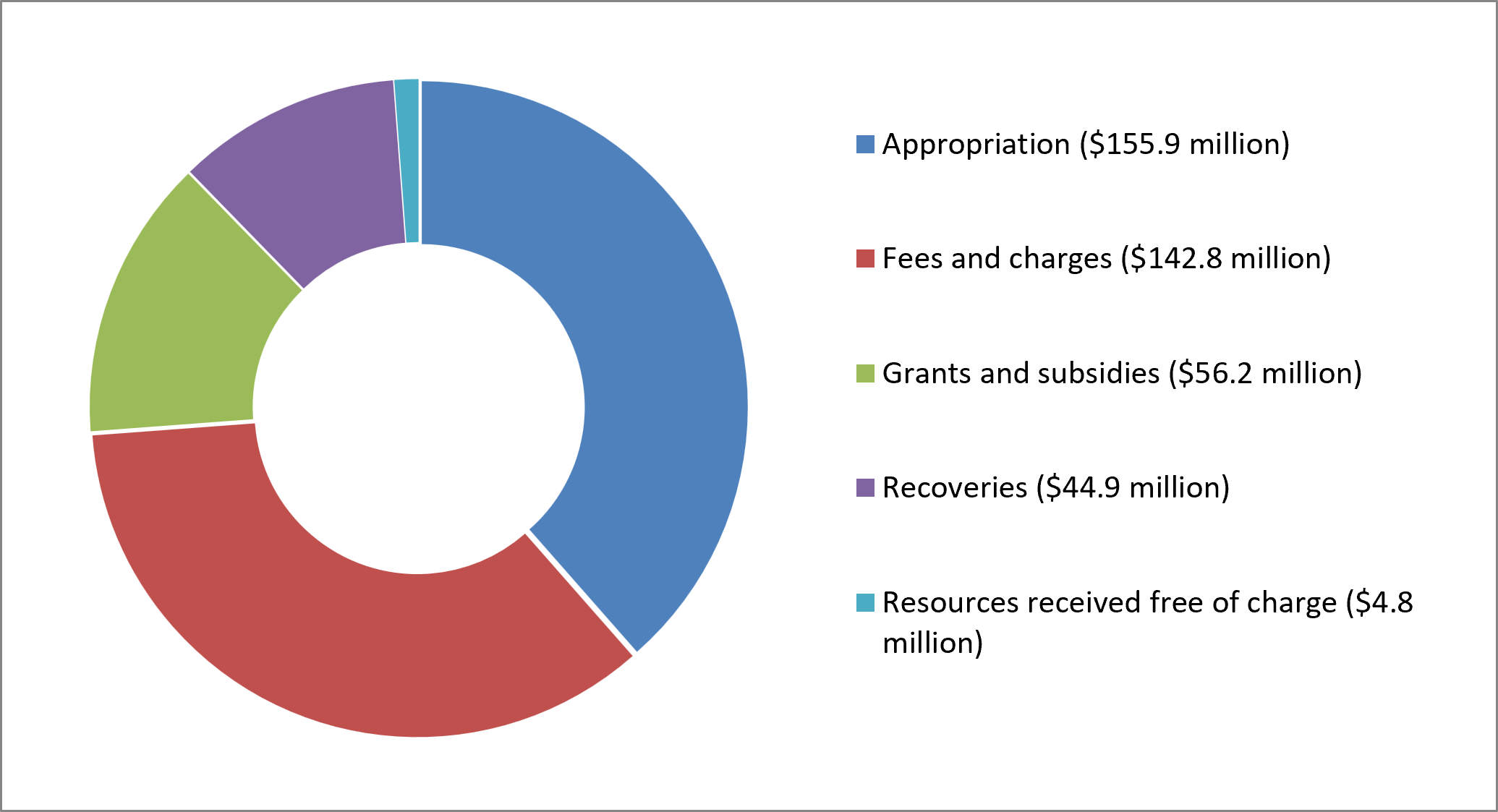
Total operating income for 2025-26, including appropriation, was $404.7 million. Income from State Government appropriations accounted for 39% of total income. A summary of income by source is shown in the figure below.
Expenses
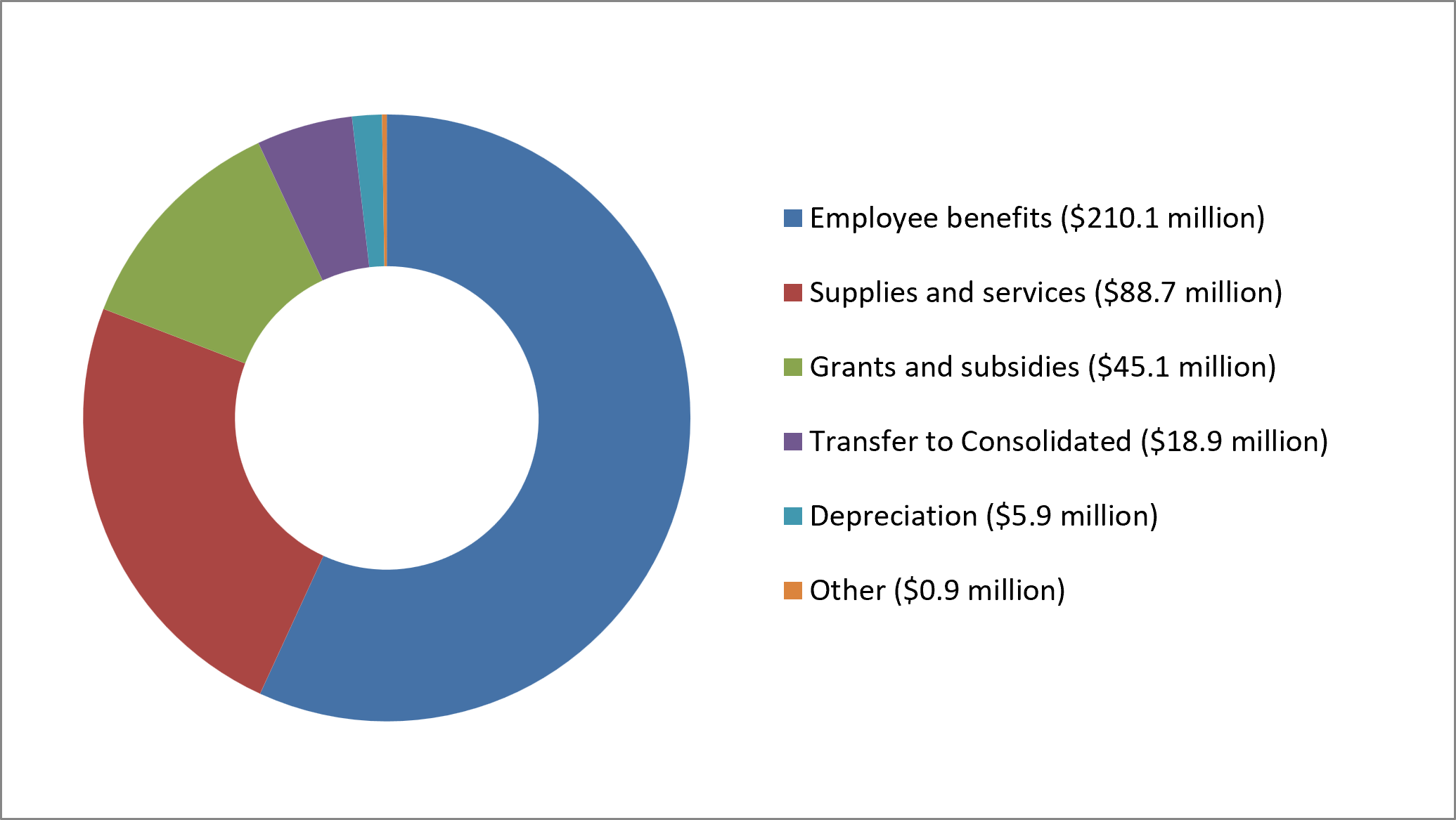
Total expenses were $369.6 million in 2025-26. A summary of expenses by category is shown in the figure below.
Statement of Financial Position
The following is a brief summary of the overall financial position of the agency. The information is unaudited. Full audited financial statements for 2025-26 are attached to this report.
| Statement of Financial Position | 2025-26 Budget $000s | 2025-26 Actual $000s | Variation $000s | 2024-25 Actual $000s |
|---|---|---|---|---|
| Current assets | 96,236 | 118,392 | 22,156 | 92,164 |
| Non-current assets | 84,721 | 86,382 | 1,661 | 62,568 |
| Total assets | 180,957 | 204,774 | 23,817 | 154,732 |
| Current liabilities | 33,418 | 42,809 | (9,391) | 31,307 |
| Non-current liabilities | 37,608 | 35,869 | 1,739 | 35,717 |
| Total liabilities | 71,026 | 78,678 | (7,652) | 67,024 |
| Net assets | 109,931 | 126,096 | 16,165 | 87,708 |
Account Payment Performance 2025-26
Treasurer’s Instruction 11 requires all undisputed accounts to be paid within 15 days of the date of the receipt of the invoice or claim unless there is a discount or written agreement between the agency and the creditor.
| Accounts paid | Value of accounts paid | ||
|---|---|---|---|---|
Number | % | $ | % | |
Paid within 15 calendar days | 23,428 | 98.6 | 336,712,617 | 97.5 |
Paid within 16 to 30 calendar days | 319 | 1.3 | 8,301,675 | 2.4 |
Paid within 31 to 60 calendar days | 23 | 0.1 | 410,786 | 0.1 |
Paid greater than 60 calendar days | 1 | 0.0 | 99 | 0.0 |
Total | 23,771 |
| 345,425,176 | |
The department paid 98.6% of all invoices within 15 calendar days (98.0% in 2024 25).
Consultants disclosure
The following is a summary of external consultants that have been engaged, the nature of work undertaken, and the actual payments made for the work undertaken.
Consultancies with a contract value below $10,000 each
| Consultancies | Purpose | $ Actual payment |
|---|---|---|
| All consultancies below $10,000 each - combined | Various | $67,066 |
Consultancies with a contract value above $10,000 each
| Consultancies | Purpose | $ Actual payment |
|---|---|---|
| Hon Michael David KC | Review of the Police Act 1998 and Serious and Organised Crime (Unexplained Wealth) Act 2009 | $10,125 |
| Koukourou Pty Ltd | Professional Engineering Services | $12,400 |
| Systems Solutions Engineering | Professional Engineering Services | $13,512 |
| Kerry Leaver Consulting | Design of conflict of interest and complaints | $15,000 |
| Human Ethos | ODPP Wellbeing Committee | $16,500 |
| Edwards Toxicology Consulting | Toxicology report | $22,050 |
| Kroon Technology | Professional Engineering Services | $22,665 |
| JF Improve Pty Ltd | Process review | $28,395 |
| Good Government Advisory | Workplace report | $36,000 |
| Damian O'Leary SC | Review of the Lobbyists Act 2015 | $36,064 |
| Yamagigu Consulting Pty Ltd | Closing the Gap | $71,900 |
| KPMG | CBS Strategic Plan | $76,200 |
| MPH Architects | Accommodation works | $79,376 |
| Baringa Partners LLP | Trial Counsel Review | $81,546 |
| FTI Consulting Australia | Regulation advice | $219,881 |
| Total | $808,680 |
Data for previous years is available at: https://data.sa.gov.au/data/dataset/attorney-generals-department-annual-report-data-consultants
See also the Consolidated Financial Report of the Department of Treasury and Finance for total value of consultancy contracts across the South Australian Public Sector.
Contractors disclosure
The following is a summary of external contractors that have been engaged by the agency, the nature of work undertaken, and the actual payments made for work undertaken during the financial year.
Contractors with a contract value below $10,000
| Contractors | Purpose | $ Actual Payment |
|---|---|---|
| All contractors below $10,000 each - combined | Various | $26,717 |
Contractors with a contract value above $10,000 each
| Contractors | Business Unit | $ Actual payment |
|---|---|---|
| KPP Ventures Pty Ltd | SWSA | $10,322 |
| Chandler Macleod Group Ltd | OPA | $13,242 |
| Maxima Training Group (Aust) | OPA | $14,155 |
| Karlka Recruiting Group Pty Ltd | SWSA | $16,647 |
| Hays Specialist Recruitment (Australia) Pty Ltd | OPA | $20,846 |
| Chandler Macleod Group Ltd | SACAT | $28,316 |
| McArthur (SA) Pty Ltd | FSSA | $33,474 |
| Robert Walters Pty Ltd | ODPP | $34,527 |
| Talent International (SA) P/L | JTS | $34,875 |
| Randstad Pty Ltd | SACAT | $36,950 |
| Peoplebank Australia Ltd | JTS | $41,949 |
| Talent International (SA) P/L | OPC | $45,816 |
| Paxus Australia Pty Ltd | JTS | $49,772 |
| Latitude It Pty Ltd | SWSA | $51,852 |
| Randstad Pty Ltd | JTS | $54,746 |
| Akkodis Australia Talent Pty Ltd | ICT | $57,806 |
| Randstad Pty Ltd | Ombudsman | $58,387 |
| Hays Specialist Recruitment (Australia) Pty Ltd | ICT | $78,288 |
| Akkodis Australia Telent Pty Ltd | JTS | $83,305 |
| Hays Specialist Recruitment (Australia) Pty Ltd | CBS | $91,654 |
| Hays Specialist Recruitment (Australia) Pty Ltd | IRAP | $97,428 |
| Harrison McMillan Pty Ltd | AAR | $101,484 |
| Halycon Knights Pty Ltd | SWSA | $148,276 |
| Hays Specialist Recruitment (Australia) Pty Ltd | OPC | $155,261 |
| DFP Recruitment Services Pty Ltd | CBS | $167,823 |
| Robert Walters Pty Ltd | JTS | $187,416 |
| Randstad Pty Ltd | CBS | $192,308 |
| DFP Recruitment Services | SACAT | $218,174 |
| Smaart Pty Ltd | SACAT | $240,837 |
| Talent International (SA) P/L | ICT | $286,466 |
| Hays Specialist Recruitment (Australia) Pty Ltd | SWSA | $336, 370 |
| Talent International (SA) P/L | CBS | $338,830 |
| Randstad Pty Ltd | SWSA | $560,560 |
| Hays Specialist Recruitment (Australia) Pty Ltd | SACAT | $687,555 |
| Total | $4,575,717 |
Data for previous years is available at: https://data.sa.gov.au/data/dataset/attorney-generals-department-annual-report-data-contractors
The SA Tenders and Contracts website displays details of Government of South Australia-awarded contracts for goods, services and works and across government contracts.
Contracts entered into with SA businesses and non-SA businesses
The following reflects contracts entered into during the financial year as reported to the Department of Treasury and Finance pursuant to Treasurer’s Instructions 18 - Procurement. The information is unaudited.
| Contracts entered into | 2025-26 Number of contracts | 2025-26 Contract value $000s |
|---|---|---|
| With South Australian businesses | 56 | $215,933,181.08 |
| With non-South Australian businesses | 39 | $19,600,785.61 |
| Total | 95 | $235,533,966.69 |
Note: ‘South Australian business’ has the same meaning as in Treasurer’s Instructions 18 - Procurement.
Risk and audit at a glance
The AGD Audit and Risk Management Committee (ARMC) provides independent advice and assistance to the Chief Executive on AGD’s risk, control and compliance framework, business ethics, policies and practices and its internal and external accountability responsibilities. The ARMC met five times during 2025-26.
AGD currently has an independent, internal audit provider in Deloitte Touche Tohmatsu (Deloitte) that undertakes audit and risk management functions. A total of four internal audit reviews were undertaken in 2025-26.
Fraud detected in the agency
In 2025-26, there were no instances of fraud reported.
Strategies implemented to control and prevent fraud
AGD is committed to the prevention, detection and reporting of fraud and corruption in connection with its activities. Any instance of fraud is to be reported to the Chief Executive and recorded on the AGD Fraud and Corruption Register.
The internal audit function performs reviews over the AGD system and control environments. In addition, AGD has a Fraud and Corruption Policy which addresses the prevention, detection and response to fraud, and a supporting procedure for reporting suspected fraud. As outlined in Treasurer’s Instruction 2, the documents are reviewed annually (last published in March 2025) and correspond with the South Australian Public Sector Fraud and Corruption Control Policy.
In June 2026, fraud awareness training sessions were facilitated by internal audit for staff to attend.
Data for previous years is available at: https://data.sa.gov.au/data/dataset/attorney-generals-department-annual-report-data-fraud
Public interest disclosure
Number of occasions on which public interest information has been disclosed to a responsible officer of the agency under the Public Interest Disclosure Act 2018:
Nil
Data for previous years is available at: https://data.sa.gov.au/data/dataset/attorney-generals-department-annual-report-data-public-interest-disclosure
Note: Disclosure of public interest information was previously reported under the Whistleblowers Protection Act 1993, which was repealed by the Public Interest Disclosure Act 2018 on 1 July 2019.